Wet vs Dry Milling: Choosing the Right Method for Chairside Dentistry
2025-08-12 |
Wet vs Dry Milling: Choosing the Right Method for Chairside Dentistry
Introduction
Milling technologies have become a core part of modern dentistry, with increasing adoption in both chairside workflows and dental laboratories. As clinics move toward digital solutions, the ability to design and produce restorations in-house is transforming how treatments are delivered.
However, choosing the right milling method is just as important as adopting the technology itself. The choice between wet and dry milling can directly impact material performance, workflow efficiency, and final restoration quality.
In this article, we explain:
- The differences between wet and dry milling
- How each method works in clinical workflows
- When to use each approach
- The advantages and limitations of both methods
Table of Contents
What Is Wet and Dry Milling in Dentistry?. 2
Why Milling Choice Matters in Chairside Dentistry. 2
Materials and Their Applications. 4
Step-by-Step Dry Milling Process. 4
Step-by-Step Wet Milling Process. 5
Benefits of Wet and Dry Milling. 6
Wet vs Dry Milling in Dental Procedures. 6
Alsharaa dental solution: Digital dentistry provider in Iraq. 7
Looking to choose the right milling solution for your clinic?. 8
What Is Wet and Dry Milling in Dentistry?
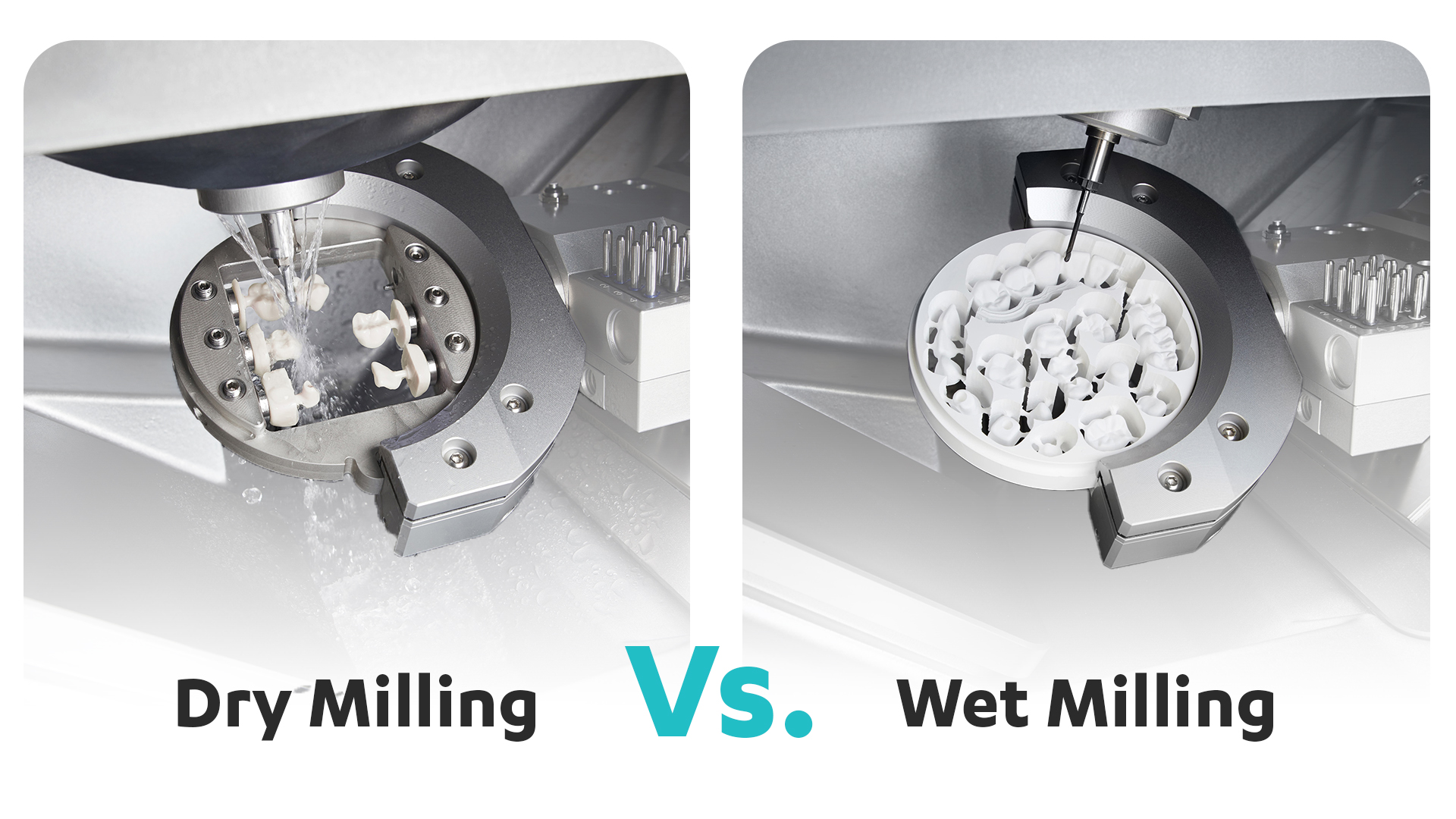
Wet and dry milling are two different methods used in CAD/CAM systems to manufacture dental restorations.
Wet milling uses water or coolant during the milling process to reduce heat and friction, making it suitable for materials such as glass ceramics.
Dry milling, on the other hand, operates without liquid and is commonly used for materials like zirconia.
Each method is designed for specific materials and clinical applications, making it important for dentists to understand when to use each approach.
Why Milling Choice Matters in Chairside Dentistry
Selecting the right milling method plays a major role in the success of chairside workflows.
The choice between wet and dry milling affects:
- Restoration quality and accuracy
- Material compatibility
- Production time
- Equipment requirements
- Overall workflow efficiency
Understanding these differences helps dentists choose the most suitable system for their clinical needs.
How Wet Milling Works
Wet milling uses a coolant—typically water—to reduce heat during the milling process. This helps protect both the material and the milling tools from damage or wear. It is especially useful for heat-sensitive materials like glass ceramics, where temperature control is important for maintaining strength and surface quality.
By reducing friction, wet milling also produces smoother finishes and more precise results, making it ideal for aesthetic restorations.
Common materials used in wet milling:
- Glass ceramics (e.g., lithium disilicate)
- Hybrid ceramics
- Composite blocks
Wet milling is often preferred when working with materials that require smooth surfaces and high aesthetic quality.
How Dry Milling Works
Dry milling operates without the use of water or coolant, relying on air and mechanical precision during the milling process. It is commonly used for harder materials that do not require cooling, such as zirconia, PMMA, and wax.
This method allows for a simpler workflow, as there is no need for water systems or additional cleaning after milling. As a result, dry milling can be more efficient and easier to manage in daily clinical operations, especially in chairside environments.
Common materials used in dry milling:
- Zirconia
- PMMA
- Wax
Dry milling systems are often faster and require less maintenance compared to wet milling systems.
Materials and Their Applications
Choosing between wet and dry milling often depends on the material being used.
Wet Milling Materials
- Glass ceramics for crowns and veneers
- Aesthetic restorations requiring smooth finishes
Dry Milling Materials
- Zirconia for strong, durable restorations
- PMMA for temporary restorations
- Wax for lab planning and design
Understanding material compatibility is essential for achieving optimal results.
Dry Milling Process (Step-by-Step)
Step 1: Digital Scan
The process begins with capturing a digital impression using an intraoral scanner. This creates an accurate 3D model of the patient’s teeth.
Step 2: Digital Design
The scan is transferred to CAD software, where the restoration is designed based on the clinical case and material requirements.
Step 3: Material Selection
The dentist or technician selects a suitable dry milling material, such as zirconia, PMMA, or wax, depending on the type of restoration.
Step 4: Dry Milling
The design is sent to the milling machine, where the restoration is milled without the use of water or coolant.
Step 5: Finishing
After milling, the restoration is removed and refined. Depending on the material, it may require polishing, sintering, or other finishing steps.
Step 6: Placement
Once completed, the final restoration is checked for fit and then placed in the patient’s mouth.
Wet Milling Process (Step-by-Step)
Step 1: Digital Scan
The process begins by capturing a digital impression using an intraoral scanner, creating an accurate 3D model of the patient’s teeth.
Step 2: Digital Design
The scan is transferred to CAD software, where the restoration is designed based on the clinical requirements.
Step 3: Material Selection
A suitable wet milling material is selected, such as glass ceramics or hybrid ceramics, depending on the type of restoration.
Step 4: Wet Milling
The design is sent to the milling machine, where the restoration is milled using water or coolant to reduce heat and protect the material.
Step 5: Cleaning and Finishing
After milling, the restoration is cleaned, dried, and may undergo additional finishing steps such as polishing or glazing.
Step 6: Placement
The final restoration is checked for fit and then placed in the patient’s mouth.
Benefits of Wet and Dry Milling
Benefits of Wet Milling
- Excellent surface quality
- Ideal for aesthetic restorations
- Reduced risk of heat-related damage
Benefits of Dry Milling
- Faster production
- Lower maintenance requirements
- Suitable for high-strength materials
Wet vs Dry Milling in Dental Procedures
|
Treatment Area |
Wet Milling |
Dry Milling |
|
Crowns (esthetic) |
Ideal |
Less common |
|
Zirconia restorations |
Not suitable |
Ideal |
|
Veneers |
Ideal |
Not preferred |
|
Temporary restorations |
Possible |
Ideal |
|
Speed |
Moderate |
Faster |
Limitations of Each Method
Wet Milling Limitations
- Requires a water system: Wet milling depends on a constant flow of coolant, which means additional equipment and regular monitoring.
- Higher maintenance needs: Water systems require frequent cleaning and maintenance to prevent buildup, contamination, or machine issues.
- Longer production time: Compared to dry milling, the process can take slightly longer due to cooling and cleaning steps.
- Post-milling cleaning required: Restorations must be cleaned and dried after milling, adding extra time to the workflow.
- More complex setup: The need for water management can make the workflow more complex compared to dry systems.
Dry Milling Limitations
- Limited material compatibility: Dry milling is mainly used for materials like zirconia and may not be suitable for glass ceramics or highly aesthetic materials.
- Surface finish may require polishing: Restorations often need additional finishing steps to achieve a smooth and aesthetic result.
- Dust management required: Dry milling produces fine particles, which require proper suction systems and maintenance.
- Not ideal for all aesthetic cases: For highly aesthetic restorations, wet milling is often preferred due to better surface quality.
- Equipment wear considerations: Milling harder materials without coolant can increase tool wear over time.
Frequently Asked Questions
Which is better, wet or dry milling?
Neither is universally better. The choice depends on the material and clinical requirements.
Can one machine perform both wet and dry milling?
Some advanced systems support both methods, but many machines are designed for one specific type.
Is wet milling more accurate?
Wet milling provides a better surface finish, especially for aesthetic materials, but both methods can achieve high accuracy.
Which Milling Method Is Faster: Wet or Dry Milling?
Dry milling is generally faster because it does not require coolant or cleaning processes.
Alsharaa dental solution: Top provider of Digital dentistry in Iraq
Alsharaa Dental Solutions supports dental clinics across Iraq in adopting advanced digital workflows by providing technologies such as CAD/CAM systems, intraoral scanners, and chairside milling solutions.
In addition, we help dental professionals understand the differences between wet and dry milling systems, ensuring they select the most suitable solution based on their materials, clinical applications, and workflow requirements.
By providing guidance and practical support, we enable clinics to make informed decisions and maximize the benefits of digital milling technologies.
Looking to choose the right milling solution for your clinic?
Contact Alsharaa Dental Solutions to learn how wet and dry milling technologies can improve your workflow, efficiency, and treatment outcomes
Share On :
Recent Posts
- Digital Dentistry in Iraq: How Modern Clinics Improve Patient Care
- Top Uses of Digital Dentistry: How Clinics Improve Efficiency and Accuracy
- How to Go Digital in Dentistry: A Guide for Modern Dental Practices
- How AI is Revolutionizing CAD Design for Dentists
- Your Lab Inside Your Clinic: The Smartest Investment You’ll Ever Make
- Premium Crown Resin & Hybrid Ceramic Crowns: Advancing Digital Dentistry in Iraq
- Wet vs Dry Milling: Choosing the Right Method for Chairside Dentistry
- Why Zirconia Cannot Be Used for Same-Day Dentistry in Clinics
- What to Buy First: Scanner, Milling Machine, or 3D Printer?
- Common Challenges in Digital Dental Workflows (and How to Fix Them)
- 3D Printed Crowns: The Future of Fast and Precise Dental Restorations