How AI is Revolutionizing CAD Design for Dentists
2025-07-29 |
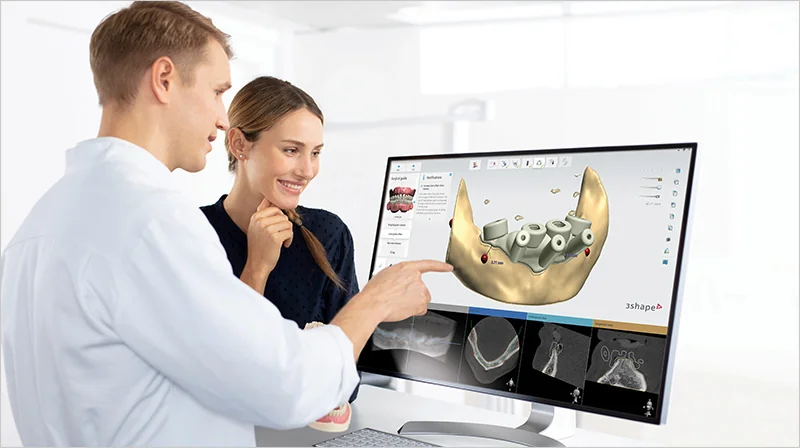
Introduction
Artificial intelligence (AI) has become an essential part of modern life, transforming how tasks are performed across multiple industries. Processes that once required hours of manual work can now be completed in minutes with greater speed and accuracy.
This rapid advancement is especially evident in digital dentistry, where efficiency and precision are critical. As dental professionals increasingly focus on delivering faster, more predictable outcomes, AI is playing a key role in optimizing workflows and enhancing clinical performance.
In modern dentistry, AI is not just an added feature—it is becoming a fundamental component of how treatments are designed, planned, and delivered. From assisting in diagnostic analysis to automating complex design processes, AI is reshaping how dentists approach everyday clinical tasks. As this technology continues to evolve, it is expected to further improve workflow efficiency, reduce variability, and support more consistent, high-quality patient outcomes.
In this article, we explore:
- What AI in CAD design means for dentistry
- How it works within digital workflows
- Why it is transforming modern dental practices
Table of contents
What is AI in CAD Design for Dentistry?. 2
Why Dentists Are Adopting AI in CAD Design. 2
Key Technologies Behind AI-Powered CAD Design. 3
Step-by-Step AI-Enhanced CAD Workflow.. 4
Benefits of AI in CAD Design for Dentists. 4
AI vs Traditional CAD Design. 5
Limitations and Considerations. 5
Alsharaa Dental Solutions: Top digital dentistry provider in Iraq. 6
Ready to integrate AI into your digital workflow?. 7
What is AI in CAD Design for Dentistry?
AI in CAD (Computer-Aided Design) for dentistry refers to the integration of artificial intelligence algorithms into digital design software to automate, assist, and optimize the creation of dental restorations.
These systems analyze large amounts of clinical data, including tooth anatomy, occlusion, and patient-specific characteristics, to generate highly accurate and customized designs for crowns, bridges, aligners, and other dental restorations.
Instead of relying entirely on manual adjustments, AI can suggest optimal designs, detect errors, and streamline the entire process.
Why Dentists Are Adopting AI in CAD Design
Dental clinics are increasingly integrating AI into CAD systems to improve efficiency, enhance accuracy, and reduce dependency on time-consuming manual design processes. As digital dentistry continues to evolve, AI-powered tools are helping dentists streamline workflows, standardize outcomes, and handle complex cases with greater confidence.
By automating repetitive design tasks and providing intelligent suggestions, AI allows clinicians to work more efficiently while maintaining a high level of precision. This shift is especially important in modern dental practices, where speed, consistency, and patient expectations are continuously increasing.
Key Reasons
- Faster design and reduced chair time
- Improved accuracy and consistency
- Reduced human error
- Enhanced treatment planning
- Better patient-specific customization
AI-driven CAD systems can analyze patient-specific data in seconds, generate optimized design proposals, and assist in detecting potential issues before production begins. This not only reduces the need for manual adjustments but also improves the predictability of treatment outcomes.
As a result, dentists can focus more on clinical decision-making, patient care, and treatment planning rather than spending excessive time on technical design tasks. This leads to a more efficient workflow, better use of clinical time, and an overall improvement in both practitioner performance and patient experience.
Key Technologies Behind AI-Powered CAD Design
AI in CAD design is supported by a combination of advanced digital technologies working together.
Machine Learning Algorithms
These systems learn from large datasets of dental cases to improve design suggestions over time.
3D Imaging and Data Processing
AI analyzes digital scans to identify anatomical landmarks, margins, and occlusion patterns.
Automated Design Engines
Generate restoration proposals based on clinical parameters and previous successful cases.
Cloud-Based Systems
Allow continuous updates, collaboration, and access to large datasets for improved accuracy.
Step-by-Step AI-Enhanced CAD Workflow
Step 1: Digital Scan
The dentist captures a high-precision 3D scan using an intraoral scanner.
Step 2: AI Analysis
AI software analyzes the scan, identifying margins, occlusion, and anatomical structures automatically.
Step 3: Automated Design Proposal
The system generates a suggested restoration design based on data and algorithms.
Step 4: Dentist Review and Adjustment
The dentist reviews the design and makes any necessary refinements.
Step 5: Production
The final design is sent to a milling machine or 3D printer for fabrication.
Benefits of AI in CAD Design for Dentists
- Significantly reduced design time
- Increased accuracy and precision
- More predictable treatment outcomes
- Enhanced workflow efficiency
- Improved patient experience
- Reduced need for remakes or adjustments
AI not only speeds up the design and production process but also significantly enhances the overall quality, consistency, and precision of the final restoration, leading to more reliable clinical outcomes and improved long-term performance.
AI vs Traditional CAD Design
|
Feature |
Traditional CAD |
AI-Powered CAD |
|
Design process |
Manual |
Assisted/automated |
|
Speed |
Moderate |
Fast |
|
Accuracy |
Operator-dependent |
Highly consistent |
|
Learning curve |
High |
Reduced |
|
Error detection |
Limited |
Advanced |
Limitations and Considerations
While AI offers many advantages, there are still important factors that dental clinics must consider before fully integrating it into their workflows. Like any advanced technology, successful implementation depends not only on the software itself but also on how well it is adopted, understood, and applied within the clinical environment.
Clinics need to evaluate their readiness in terms of infrastructure, training, and workflow adaptation to ensure that AI tools are used effectively and deliver their full potential.
- Requires initial investment in advanced software
- Learning curve for new systems
- Dependence on data quality
- AI supports—but does not replace—clinical expertise
In addition, the accuracy of AI-generated designs is directly influenced by the quality of the input data, such as digital scans and case information. Poor data can lead to suboptimal results, highlighting the importance of proper scanning techniques and case preparation.
Dentists must still make the final decisions, review AI-generated designs carefully, and ensure clinical accuracy. AI should be viewed as a powerful assistant that enhances efficiency and precision—not as a replacement for professional judgment and clinical expertise.
Frequently Asked Questions
Is AI replacing dentists in CAD design?
No. AI is a supportive tool that enhances efficiency and accuracy, but the dentist remains responsible for clinical decisions and final approval.
How accurate is AI-generated dental design?
AI can achieve very high levels of accuracy by analyzing large datasets and identifying patterns, often reducing human error.
Does AI reduce treatment time?
Yes. AI significantly reduces design time, which helps speed up the overall workflow and enables faster treatment delivery.
Is AI suitable for all dental cases?
AI works well for most standard cases, but complex cases may still require additional manual adjustments.
Conclusion
AI is transforming CAD design in dentistry by making workflows faster, more accurate, and more efficient. By reducing manual effort and improving consistency, AI allows dentists to deliver better results in less time.
As digital dentistry continues to evolve, AI will play an increasingly important role in shaping the future of clinical workflows, enabling smarter treatment planning and improved patient care.
Alsharaa Dental Solutions: Top digital dentistry provider in Iraq
Alsharaa Dental Solutions plays a key role in advancing digital dentistry across Iraq by helping clinics adopt intelligent, technology-driven workflows. By integrating AI-powered CAD systems alongside intraoral scanning, 3D printing, and chairside milling, Alsharaa enables dentists to improve efficiency, accuracy, and clinical outcomes.
Through continuous support, training, and AI-powered workflow optimization, Alsharaa enables clinics to transition into intelligent digital practices where automation, data analysis, and predictive design enhance efficiency, accuracy, and clinical decision-making.
Ready to integrate AI into your digital workflow?
Contact Alsharaa Dental Solutions to discover how AI-powered CAD systems, intraoral scanners, and advanced digital technologies can help you build a smarter, faster, and more efficient dental practice.
Share On :
Recent Posts
- Digital Dentistry in Iraq: How Modern Clinics Improve Patient Care
- Top Uses of Digital Dentistry: How Clinics Improve Efficiency and Accuracy
- How to Go Digital in Dentistry: A Guide for Modern Dental Practices
- How AI is Revolutionizing CAD Design for Dentists
- Your Lab Inside Your Clinic: The Smartest Investment You’ll Ever Make
- Premium Crown Resin & Hybrid Ceramic Crowns: Advancing Digital Dentistry in Iraq
- Wet vs Dry Milling: Choosing the Right Method for Chairside Dentistry
- Why Zirconia Cannot Be Used for Same-Day Dentistry in Clinics
- What to Buy First: Scanner, Milling Machine, or 3D Printer?
- Common Challenges in Digital Dental Workflows (and How to Fix Them)
- 3D Printed Crowns: The Future of Fast and Precise Dental Restorations