3D Printed Crowns: The Future of Fast and Precise Dental Restorations
2026-09-03 |
3D Printed Crowns: The Future of Fast and Precise Dental Restorations
For decades, getting a dental crown meant two visits, a physical impression, and a waiting period of one to two weeks while a laboratory fabricated the restoration. Patients left their first appointment with a temporary crown and returned days later hoping the permanent one would fit. It was a process that worked, but one that has not changed much in a very long time. Today, 3D printing technology is changing that completely. Dental clinics can now produce crowns faster, with greater precision, and at a lower cost than traditional methods allow. In this article we explain how 3D printed crowns work, what materials are used, what the step-by-step process looks like, and what this means for patients and clinics in Iraq.
What Are 3D Printed Dental Crowns?
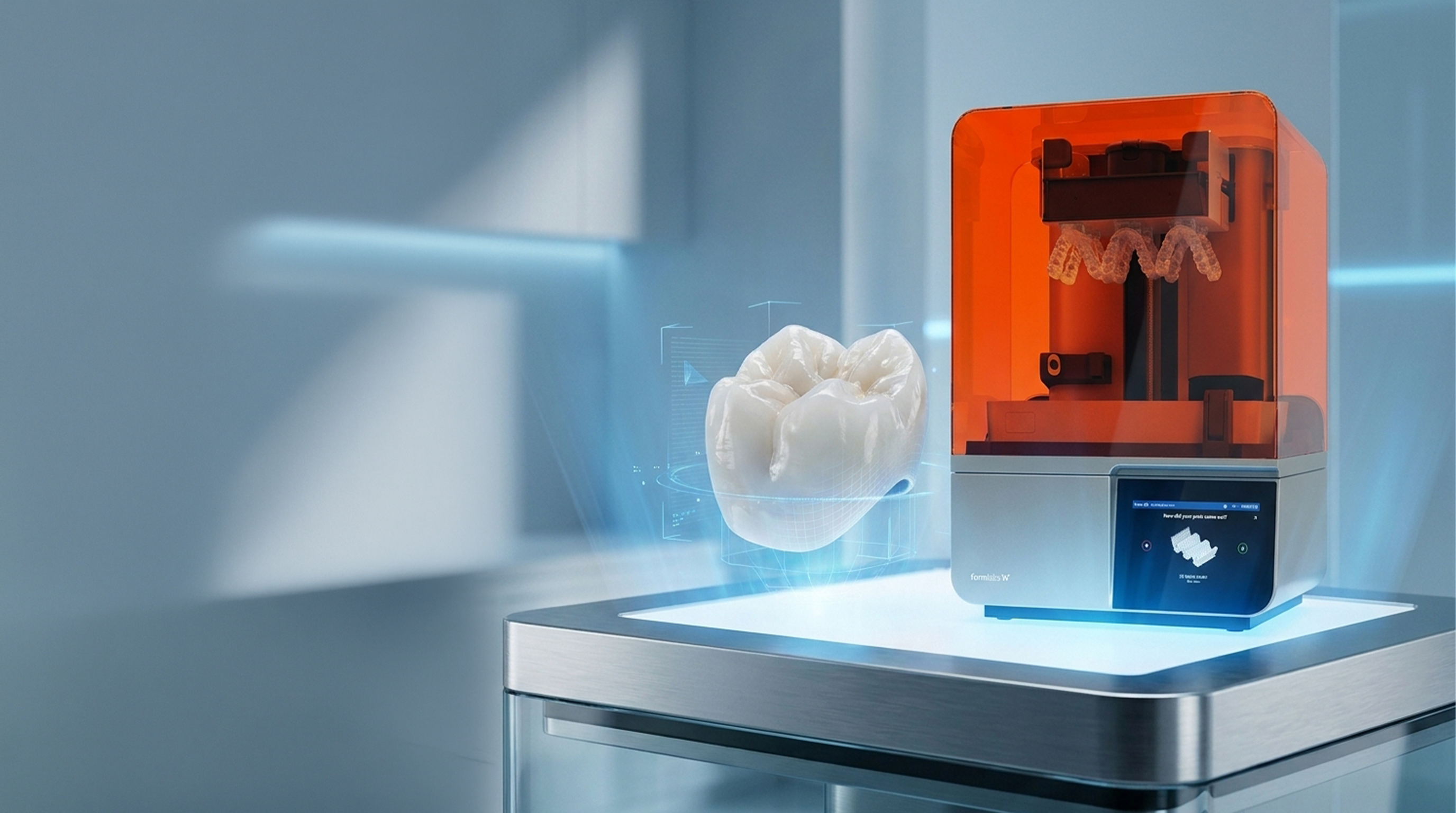
A 3D-printed dental crown is a digitally designed restoration manufactured layer by layer using a dental 3D printer and a material specifically intended for restorative applications. Instead of sending a physical impression to an external laboratory, the dentist scans the tooth digitally, designs the crown using CAD software, and prints it directly, either in the clinic or at a local digital facility. The result is a crown that can be ready in hours rather than days, with a level of fit accuracy that physical impression methods struggle to match consistently.
In This Article
- How 3D printed crowns work
- Materials used in 3D printed crowns
- Step-by-step workflow
- Benefits for patients and dental clinics
- 3D printed crowns vs traditional crowns
- Current limitations to be aware of
- FAQ
How 3D Printed Crowns Work
3D printed crowns rely on a fully connected digital workflow. An intraoral scanner captures a precise 3D model of the prepared tooth and surrounding dentition. That model is imported into CAD software, where the crown is designed to match the shape, size, and bite of the existing teeth. The approved design is then sent to a 3D printer, which builds the crown layer by layer from dental-grade resin or composite material.
The printing process used in dentistry is typically stereolithography (SLA) or digital light processing (DLP), both of which cure liquid resin using light, layer by layer, at thicknesses as fine as 25 to 50 microns. This level of precision means the crown fits the prepared tooth with a level of accuracy that is difficult to achieve consistently through manual laboratory processes.
Materials Used in 3D Printed Crowns
Temporary Dental Resin
The most widely used material in dental 3D printing is photopolymer resin. It is ideal for temporary crowns, placed while a permanent restoration is being planned, and for longer-term temporaries in phased treatment. Resin crowns are easy to print, polish, and shade match, and they offer very good fit accuracy.
High-Strength Permanent Resin
Newer ceramic-filled composite resins are now approved for use in permanent restorations. These materials offer significantly improved wear resistance and a more natural appearance compared to earlier generations of dental resin. For many routine crown cases, particularly in posterior teeth, they are a clinically viable permanent option.
3D Printed and Sintered Zirconia
Zirconia, one of the strongest materials available in dentistry, can also be 3D printed in a pre-sintered form and then fired in a furnace to reach its final density and strength. This approach combines the precision of digital fabrication with the durability of zirconia, and is emerging as a high-quality option for permanent crowns and bridges where maximum strength is required.
Step-by-Step Workflow for a 3D Printed Crown
Step 1: Digital Scan
The dentist prepares the tooth and captures a digital scan using an intraoral scanner. The scan takes two to five minutes and produces an accurate 3D model of the prepared tooth, adjacent teeth, and bite relationship, with no physical impression material required.
Step 2: Crown Design
Using dental CAD software, the crown is designed based on the digital scan. The software automatically suggests a crown shape based on the surrounding teeth and bite. The dentist or technician reviews and refines the design before approving it for production.
Step 3: Printing
The approved design file is sent to the 3D printer. Depending on the printer and material chosen, the crown is produced in 20 minutes to two hours. Clinics can often print multiple crowns in the same session, making the workflow efficient.
Step 4: Post-Processing
After printing, the crown is cleaned, cured under a UV light source, and polished to achieve the final surface quality. This step is quick but essential; it ensures the crown is biocompatible, smooth, and correctly shaded before placement.
Step 5: Try-In and Placement
The dentist seats the crown in the patient's mouth, checks the fit and bite, makes any minor adjustments, and bonds it in place. For same-day cases using in-clinic printing, the entire process from scan to cemented crown can be completed in a single appointment.
Benefits of 3D Printed Crowns for Patients and Clinics
For Patients
- Same-day or next-day treatment, no need to wait one to two weeks for a laboratory crown
- No physical impression material; the digital scan is faster and more comfortable
- Fewer appointments; treatment can often be completed in a single visit
- High fit accuracy; precise layering means the crown seats naturally with minimal adjustment
- Digital record kept on file; if the crown ever needs to be replaced, it can be reprinted without a new scan
For Dental Clinics
- Elimination of laboratory fees for routine single-unit restorations
- Full control over the restoration from scan to placement
- Reduced turnaround time improves patient flow and appointment scheduling
- Multiple crowns can be produced in a single print session
- Digital files stored permanently; easy to reproduce or modify
- Competitive advantage; same-day crowns are increasingly expected by patients
3D Printed Crowns vs Traditional Laboratory Crowns
|
Feature |
Traditional Crown |
3D Printed Crown |
|
Production time |
7 to 14 days (external lab) |
Same day to 48 hours |
|
Impression method |
Physical putty impression |
Digital intraoral scan |
|
Patient appointments |
Minimum 2 visits |
Can be completed in 1 visit |
|
Material options |
Ceramic, metal, zirconia |
Resin, ceramic-filled composite, zirconia |
|
Fit accuracy |
Good, dependent on impression quality |
Very high, 25 to 50 micron layer precision |
|
Cost per unit |
Higher, includes lab fees |
Lower, produced in-house |
|
File storage |
Physical model (takes up space) |
Digital file stored permanently |
|
Remake process |
New impression, new lab order |
Reprint from existing digital file |
Current Limitations to Be Aware Of
3D printed crowns represent a genuine advancement in restorative dentistry, but there are important clinical considerations every dentist should understand before adopting the technology:
- Permanent resin crowns may not yet match the long-term wear resistance of milled ceramic in all clinical situations, particularly in patients with heavy bite forces
- Post-processing requires training and proper equipment to achieve consistent surface quality
- Zirconia printing with sintering requires additional investment in a furnace
- Printer maintenance and resin calibration need to be performed consistently to maintain accuracy
- Not all insurance systems may yet categorize 3D printed crowns in the same way as laboratory-fabricated ones
Frequently Asked Questions
Are 3D printed crowns as strong as traditional crowns?
3D-printed resin crowns can provide reliable strength, particularly for temporary restorations. Newer materials are also expanding their use for definitive restorations, although milled ceramic and zirconia remain well-established choices for high-load areas.
How long does a 3D printed crown last?
Longevity depends on the material, clinical use, and patient factors. Temporary crowns are intended for short-term use, while some newer 3D-printing materials are designed for longer-term restorations.
Can any dental clinic use a 3D printer for crowns?
Yes, with the right digital workflow and training. Clinics typically need an intraoral scanner, CAD software, a compatible dental 3D printer, approved materials, and appropriate post-processing equipment.
Is 3D printing better than milling for crowns?
Both technologies have different advantages. Milling is well established for ceramic and zirconia restorations, while 3D printing offers greater manufacturing flexibility and efficiency for suitable restorative applications.
What is the difference between a 3D printed crown and a same-day milled crown?
Both begin with a digital scan and CAD design, but the manufacturing process differs. Milling removes material from a solid block, while 3D printing builds the restoration layer by layer using a compatible printable material.
Alsharaa Dental Solutions: Powering Digital Dentistry Across Iraq
Alsharaa Dental Solutions is a trusted provider of advanced digital dentistry technologies in Iraq, helping dental clinics move beyond individual devices and build complete, efficient 3D-printing workflows. From selecting the right dental 3D printer and compatible materials to integrating CAD software and optimizing production, Alsharaa provides the technology, expertise, and hands-on training needed for confident implementation.
With dedicated local technical expertise and after-sales support, Alsharaa helps clinics get the most from their investment and integrate 3D printing successfully into everyday practice. Whether upgrading an existing digital setup or building a workflow from the ground up, Alsharaa Dental Solutions provides the solutions and support to move your clinic forward
Interested in Adding 3D Crown Printing to Your Clinic?
Contact Alsharaa Dental Solutions to discover the right 3D printing technology, materials, and digital workflow for your clinic. Our team will help you choose a solution that matches your clinical needs, workflow, and budget, backed by expert guidance and local support.
Share On :
Recent Posts
- Digital Dentistry in Iraq: How Modern Clinics Improve Patient Care
- Top Uses of Digital Dentistry: How Clinics Improve Efficiency and Accuracy
- How to Go Digital in Dentistry: A Guide for Modern Dental Practices
- How AI is Revolutionizing CAD Design for Dentists
- Your Lab Inside Your Clinic: The Smartest Investment You’ll Ever Make
- Premium Crown Resin & Hybrid Ceramic Crowns: Advancing Digital Dentistry in Iraq
- Wet vs Dry Milling: Choosing the Right Method for Chairside Dentistry
- Why Zirconia Cannot Be Used for Same-Day Dentistry in Clinics
- What to Buy First: Scanner, Milling Machine, or 3D Printer?
- Common Challenges in Digital Dental Workflows (and How to Fix Them)
- 3D Printed Crowns: The Future of Fast and Precise Dental Restorations