Common Challenges in Digital Dental Workflows (and How to Fix Them)
2026-07-14 |
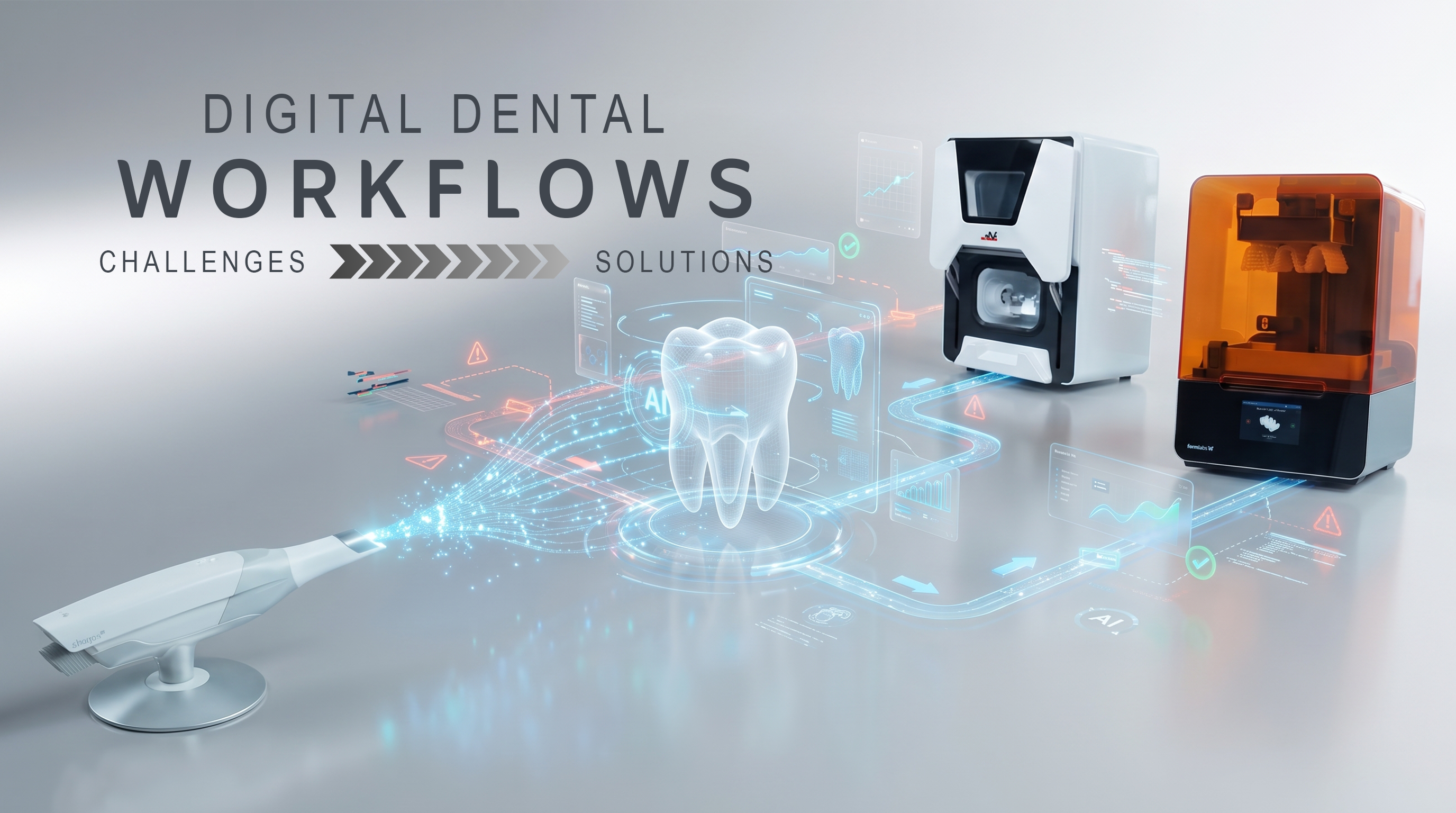
Common Challenges in Digital Dental Workflows (and How to Fix Them)
Introduction
No system is flawless. Although digital dentistry has transformed modern dental practice by improving accuracy, efficiency, and patient experience, every digital workflow comes with its own challenges. Whether it is an incomplete digital scan, software compatibility issues, communication gaps between the clinic and laboratory, or insufficient team training, these obstacles can affect treatment quality if they are not addressed properly.
The good news is that most digital workflow challenges are preventable. With the right technology, well-defined clinical protocols, and ongoing training, dental clinics can overcome these issues and maximize the benefits of digital dentistry.
In this article, we discuss:
- The most common challenges in digital dental workflows
- Why do these challenges occur
- Practical solutions to improve efficiency and accuracy
- Best practices for creating a smoother digital workflow
What Are Digital Dental Workflows?
Digital dental workflows use digital technologies to replace or improve conventional clinical and laboratory procedures. Instead of relying solely on physical impressions and manual fabrication, digital workflows integrate technologies such as intraoral scanning, CAD/CAM design, 3D printing, and digital communication between the clinic and laboratory.
These technologies allow dentists to plan treatments more accurately, improve collaboration with dental laboratories, and deliver restorations with greater precision and efficiency.
Why Digital Dental Workflows Matter
Digital workflows are becoming the standard in modern dentistry because they improve both clinical efficiency and patient care. When implemented correctly, they can reduce appointment times, improve communication with laboratories, and increase the accuracy of restorations and treatment planning.
They also help minimize human error by replacing many manual procedures with standardized digital processes.
Common Challenges in Digital Dental Workflows
Inaccurate Digital Scans
A digital workflow begins with an accurate scan. Poor scanning technique, patient movement, saliva contamination, or incomplete data capture can affect the quality of the digital impression and compromise the final restoration.
How to Fix It
- Follow a consistent scanning protocol.
- Ensure proper moisture control.
- Capture all required anatomical landmarks.
- Review the scan before sending it to the laboratory.
- Provide regular scanner training for the clinical team.
Software Compatibility Issues
Dental clinics often use multiple digital systems, including scanners, CAD software, milling machines, and laboratory platforms. If these systems are incompatible, transferring files can be inefficient and may delay treatment.
How to Fix It
- Choose systems that support open digital workflows.
- Keep software updated.
- Confirm file compatibility before implementing new equipment.
Communication Between the Clinic and Laboratory
Even with advanced technology, poor communication remains one of the leading causes of remakes and treatment delays. Missing photographs, incomplete prescriptions, or unclear instructions can affect the final result.
How to Fix It
- Provide complete digital prescriptions.
- Include clinical photographs when appropriate.
- Share relevant patient information.
- Maintain clear communication throughout every case.
Limited Staff Training
Digital technology is only as effective as the team using it. Without proper training, even advanced equipment may not deliver consistent results.
How to Fix It
- Invest in continuous education.
- Provide hands-on training for new technologies.
- Develop standardized clinical workflows for the entire team.
Choosing Technology Without a Clear Plan
Many clinics invest in digital equipment without first evaluating their clinical needs or workflow goals. This can lead to underused equipment and unnecessary expenses.
How to Fix It
- Identify your clinic's priorities before purchasing equipment.
- Build your digital workflow gradually.
- Select technologies that integrate well with existing systems.
Digital File Management
As clinics adopt digital workflows, they generate large amounts of patient data, including scans, photographs, STL files, and treatment plans. Without proper organization, retrieving or sharing files can become time-consuming.
How to Fix It
- Use organized digital folders.
- Apply consistent file naming conventions.
- Back up patient records regularly.
- Secure sensitive patient data.
Best Practices for a Successful Digital Workflow
A successful digital workflow depends on technology, planning, and teamwork. Clinics can improve efficiency by:
- Standardizing scanning protocols.
- Training the clinical team regularly.
- Keeping software and equipment updated.
- Strengthening communication with the dental laboratory.
- Reviewing digital cases before manufacturing.
- Investing in technologies that match the clinic's clinical needs.
Step-by-Step: Building a Successful Digital Dental Workflow
Step 1: Assess Your Clinic's Needs
Before investing in digital equipment, evaluate your clinic's workflow, treatment goals, and the procedures you perform most frequently. This helps ensure you choose technologies that genuinely improve efficiency rather than adding unnecessary complexity.
Step 2: Choose Compatible Digital Technologies
Select digital systems that integrate smoothly with one another. Intraoral scanners, CAD/CAM software, milling machines, and 3D printers should support an efficient workflow and allow seamless data transfer between the clinic and laboratory.
Step 3: Train Your Clinical Team
Even the most advanced technology requires proper training. Ensure that dentists, assistants, and laboratory staff understand how to use digital equipment correctly and follow standardized clinical protocols.
Step 4: Establish Clear Communication
Create a consistent communication process between the clinic and the dental laboratory. Sharing complete digital scans, clinical photographs, and detailed prescriptions helps reduce misunderstandings and improve treatment accuracy.
Step 5: Review Every Digital Case
Before manufacturing or beginning treatment, carefully review the digital scan, treatment plan, and case details. Identifying errors early helps prevent remakes, delays, and unnecessary appointments.
Step 6: Monitor and Improve Your Workflow
A digital workflow should continue evolving. Regularly evaluate your equipment, software, and clinical protocols, and provide ongoing training to ensure your team continues delivering efficient and predictable results.
Common Digital Dental Workflow Mistakes and Best Practices
|
Common Mistake |
Best Practice |
|
Rushing the scanning process |
Follow a consistent scanning sequence. |
|
Skipping software updates |
Update software regularly. |
|
Incomplete lab prescriptions |
Include all relevant clinical information. |
|
Inadequate team training |
Schedule ongoing training sessions. |
|
Poor case documentation |
Store and organize digital records systematically. |
|
Purchasing equipment without planning |
Build a digital workflow before investing. |
Frequently Asked Questions
What is a digital dental workflow?
A digital dental workflow uses technologies such as intraoral scanners, CAD/CAM software, and digital treatment planning to improve the diagnosis, design, and delivery of dental treatments.
What is the biggest challenge in digital dentistry?
One of the most common challenges is obtaining accurate digital scans, as scan quality directly affects treatment planning and restoration accuracy.
Can small clinics benefit from digital workflows?
Yes. Many digital technologies can be introduced gradually, allowing clinics to improve efficiency without completely replacing their existing workflow.
Do digital workflows improve treatment accuracy?
When implemented correctly, digital workflows can improve precision, reduce remakes, and enhance communication between clinics and laboratories.
How can clinics improve their digital workflow?
Regular staff training, standardized protocols, reliable equipment, and effective communication are essential for building a successful digital workflow.
About Alsharaa Dental Solutions
Alsharaa Dental Solutions supports dental professionals across Iraq by providing advanced digital dentistry solutions, including intraoral scanners, CAD/CAM systems, 3D printing technologies, digital treatment planning, and modern clinical workflows.
By helping clinics adopt reliable digital technologies and efficient workflows, Alsharaa enables dental teams to improve accuracy, productivity, and patient care while staying at the forefront of modern dentistry.
Conclusion
Digital dental workflows offer significant advantages for both clinicians and patients, but successful implementation requires more than simply investing in new technology. Accurate scanning, effective communication, proper training, and well-structured workflows all contribute to predictable clinical outcomes.
By recognizing common challenges and applying practical solutions, dental clinics can build more efficient digital workflows, reduce treatment delays, and deliver a consistently higher standard of patient care.
Ready to Optimize Your Digital Workflow?
Contact Alsharaa Dental Solutions to learn more about:
- Intraoral scanners
- CAD/CAM systems
- 3D printing solutions
- Digital treatment planning
- Modern technologies that improve efficiency, accuracy, and patient care
Share On :
Recent Posts
- Digital Dentistry in Iraq: How Modern Clinics Improve Patient Care
- Top Uses of Digital Dentistry: How Clinics Improve Efficiency and Accuracy
- How to Go Digital in Dentistry: A Guide for Modern Dental Practices
- How AI is Revolutionizing CAD Design for Dentists
- Your Lab Inside Your Clinic: The Smartest Investment You’ll Ever Make
- Premium Crown Resin & Hybrid Ceramic Crowns: Advancing Digital Dentistry in Iraq
- Wet vs Dry Milling: Choosing the Right Method for Chairside Dentistry
- Why Zirconia Cannot Be Used for Same-Day Dentistry in Clinics
- What to Buy First: Scanner, Milling Machine, or 3D Printer?
- Common Challenges in Digital Dental Workflows (and How to Fix Them)
- 3D Printed Crowns: The Future of Fast and Precise Dental Restorations